
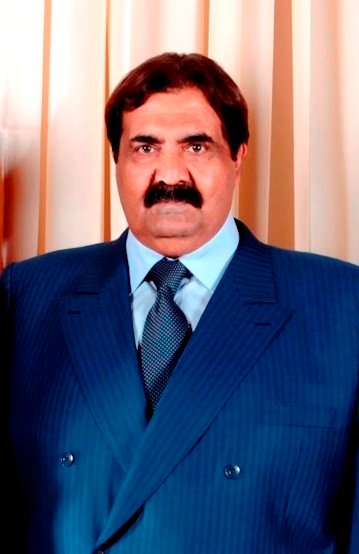
Sheikh Hamad bin Khalifa Al Thani, the former Emir of Qatar whose 18-year rule transformed a small Gulf peninsula into one of the wealthiest nations on Earth and gave the world Al Jazeera, has died at 74. Qatar’s Amiri Diwan announced the death on Sunday, prompting a four-day period of national mourning as tributes poured in from across the Middle East and beyond.
What to know:
- Sheikh Hamad, born January 1, 1952, ruled Qatar from 1995 to 2013 after seizing power from his father in a bloodless palace coup.
- Under his leadership, Qatar’s liquefied natural gas (LNG) production surged to roughly 77 million tonnes a year, making it the world’s top LNG exporter.
- Qatar became the richest country in the world per capita, with average annual income reaching roughly $86,440.
- He launched Al Jazeera in 1996, which grew into one of the most influential news networks globally.
- In 2013, he abdicated in favor of his son, Sheikh Tamim bin Hamad Al Thani, then 33 — a rare voluntary handover among Gulf Arab monarchies.
- Qatar has declared a four-day mourning period, suspending government work and lowering flags to half-mast.
Sheikh Hamad’s death closes a chapter on one of the most consequential reigns in modern Gulf history. He came to power in June 1995 by deposing his own father, Khalifa bin Hamad Al Thani, while the elder emir was traveling abroad — a coup notable for unfolding without bloodshed in a region where succession disputes have often turned violent. From that moment, Sheikh Hamad set about remaking Qatar’s place in the world, betting the country’s future on its vast offshore North Field, the largest natural gas reservoir on the planet, which it shares with Iran.
That bet paid off spectacularly. Qatar’s LNG exports financed a construction boom that reshaped Doha’s skyline, funded a sovereign wealth fund with holdings stretching from London real estate to stakes in global banks, and allowed the tiny country to punch far above its weight diplomatically. Qatar hosted the 2022 FIFA World Cup, positioned itself as a mediator in conflicts from Gaza to Afghanistan, and became home to the sprawling Al Udeid Air Base, a critical hub for United States military operations in the Middle East.
Perhaps Sheikh Hamad’s most enduring legacy outside the energy sector was media. His 1996 decision to bankroll Al Jazeera broke the state-controlled mold of Arab broadcasting at the time, introducing satellite coverage that was, for its era, unusually willing to criticize Arab governments alongside Western ones. The channel’s rise made it a fixture of newsrooms worldwide and a frequent source of friction with neighboring governments, some of which accused Qatar of using the network to project influence across the region.
His domestic and foreign policy choices were not without controversy. Qatar’s support for Islamist movements during the Arab Spring, and its ties to groups like Hamas and the Muslim Brotherhood, contributed to a bitter rift with Saudi Arabia, the United Arab Emirates, Bahrain and Egypt, which imposed a land, sea and air blockade on Qatar between 2017 and 2021. Sheikh Hamad had already handed power to his son by then, but the blockade tested the institutions and alliances he had built, and Qatar ultimately weathered it largely intact.
The 2013 abdication itself was widely seen as a deliberate act of statecraft. Gulf monarchs have traditionally ruled until death, making way only through succession after passing, so Sheikh Hamad’s decision to step aside while still relatively healthy, handing power to Sheikh Tamim, was read as an attempt to ensure a smooth generational transition and avoid the kind of power struggles that have destabilized other ruling families in the region.
Tributes have arrived from Gulf Cooperation Council states, Egypt, Turkey and beyond, with leaders praising his role in regional diplomacy and Qatar’s economic rise. Under Sheikh Tamim, Qatar has continued to lean on the foundations his father built, including its LNG dominance and its role as a go-between in some of the world’s most intractable conflicts. As the country enters its mourning period, attention will turn to how Sheikh Tamim’s government marks the passing of the man who set Qatar on its current course, and what if any policy shifts follow a reign that reshaped a small Gulf state into a global energy and diplomatic power.
Leave a Reply