
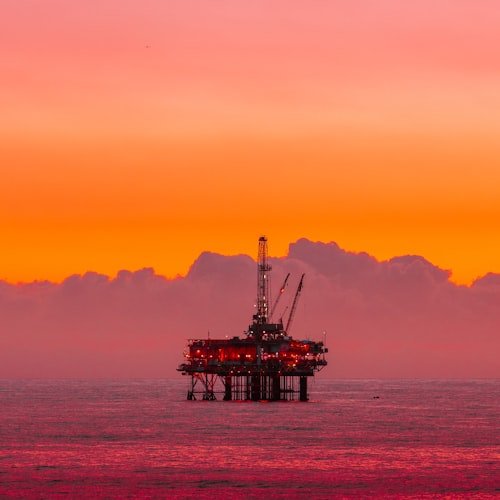
Oil prices jumped to start the week as a fragile cease-fire between the United States and Iran unraveled, with Brent crude climbing toward $79 a barrel and West Texas Intermediate trading near $74. The renewed strikes have thrown the status of the Strait of Hormuz — the corridor that carries roughly a fifth of the world’s oil and gas trade — into dispute, with Tehran claiming the waterway is closed and U.S. Central Command insisting it remains open. The volatility lands just as Federal Reserve Chair Kevin Warsh prepares for his first congressional testimony this week, a debut appearance that will test how the central bank weighs a fresh energy shock against inflation still running at 4.2%.
What to know:
- Brent crude is pushing toward $79 a barrel after rising 5.4% over the past week, with West Texas Intermediate trading near $74 as the US-Iran conflict reignites.
- The Strait of Hormuz’s status is in dispute — Iran says the waterway, which carries roughly 20% of global oil and gas trade, is closed “until further notice,” a claim U.S. Central Command denies.
- Fed Chair Kevin Warsh testifies before Congress this week, appearing before the House Financial Services Committee Tuesday and the Senate Banking Committee Wednesday for his first Semiannual Monetary Policy Report since taking office.
- The Fed is holding its benchmark rate at 3.50%-3.75% even as headline inflation runs at 4.2%, with June meeting minutes showing internal debate over whether further hikes are needed.
- Equity markets shrugged off the volatility last week, with the S&P 500 up 0.4% and the Nasdaq Composite up 0.3%, helped by a chip-sector rally tied to SK Hynix’s US listing debut.
The latest flare-up traces back to the collapse of an interim US-Iran peace agreement reached in June, which had briefly pulled crude back toward pre-conflict levels. Since then, both sides have exchanged strikes, and the disagreement over the Strait of Hormuz has become the central flashpoint for traders. Iran’s government maintains that the strait is now closed to shipping “until further notice,” while U.S. Central Command says its forces have launched additional strikes specifically to keep the route open, not to close it. The conflicting accounts have made it difficult for shipping insurers and tanker operators to plan routes, and that uncertainty alone is enough to keep a risk premium baked into prices even if tanker traffic hasn’t fully stopped.
The stakes are high because roughly a fifth of the world’s oil and liquefied natural gas moves through the strait, a narrow passage between Iran and Oman with no meaningful alternative route for Gulf producers. Brent’s climb to near $79 and WTI’s move to about $74 reflect that risk being priced back into the market after a period of relative calm; Brent alone gained 5.4% over the past week. Refiners, airlines and shippers that had budgeted for calmer energy costs are now recalculating, and the move is already showing up in gasoline futures and shipping insurance premiums.
The oil shock arrives at an inconvenient moment for the Federal Reserve. Chair Kevin Warsh, who took over the central bank earlier this year, held the benchmark rate at 3.50% to 3.75% at his first meeting in June, but minutes from that gathering showed a committee split over whether more tightening is coming. Warsh himself has said inflation, running at 4.2% on a headline basis, is “too high” for comfort, and he has so far declined to signal how the Fed will treat energy-driven price pressure separately from the underlying trend.
That ambiguity will be tested directly this week. Warsh delivers his first Semiannual Monetary Policy Report to the House Financial Services Committee on Tuesday and the Senate Banking Committee on Wednesday, with June consumer price data landing just ahead of the House hearing and producer price figures due before the Senate session. Investors are parsing his remarks for any hint of a September rate move, and a sustained jump in oil prices complicates that calculus: it pushes headline inflation higher through energy costs even as it does little to address the underlying price pressures the Fed has been trying to cool.
Markets have so far treated the two developments separately. Equities closed out last week higher, with the S&P 500 adding 0.4% and the Nasdaq Composite gaining 0.3%, driven in large part by a rally in semiconductor and AI-linked names after SK Hynix’s debut on US exchanges. But a sustained rise in crude tends to feed into headline inflation readings within weeks, not months, which means the divergence between a resilient stock market and a jumpier energy market may not last long. If Warsh’s testimony this week signals any tilt toward hiking rather than holding, the interplay between geopolitics, inflation data and monetary policy will likely become the dominant story for markets through the rest of the summer.
Leave a Reply